Embodied Aesthetic Reading in Interactive Books for Toddlers.
Material Interactivity, Adult Mediation, and Meaning-Making in Early Childhood
DOI:
https://doi.org/10.57579/2026.6Keywords:
Embodied reading, reader-response theory, toddler readingAbstract
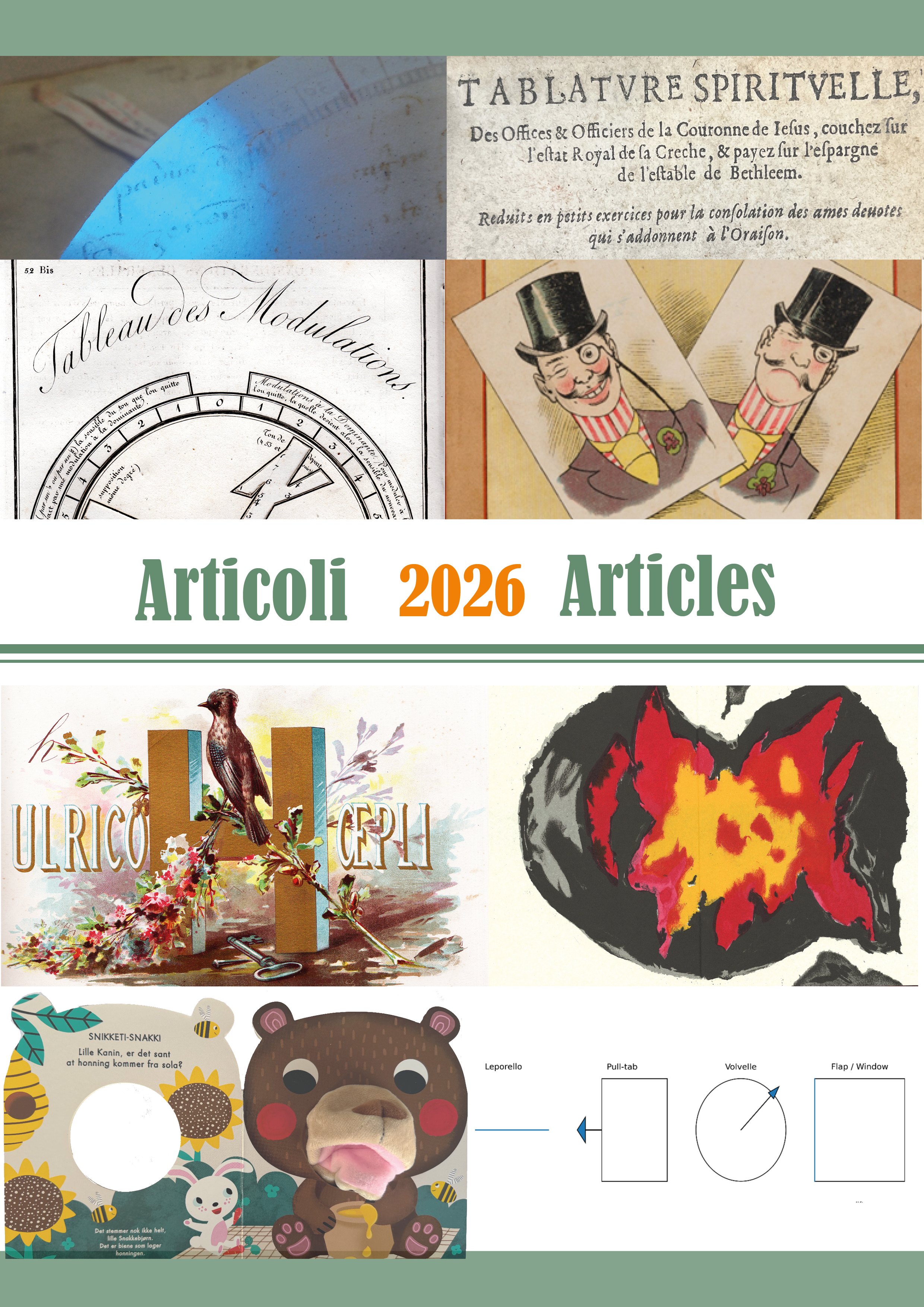
Interactive books for young children invite readers to act through tactile, mechanical, and performative elements that transform reading into a multisensory event. Despite their growing presence in early childhood settings, the aesthetic and participatory dimensions of such books have received limited scholarly attention. This article examines how material interactivity is realized in shared reading situations involving toddlers aged one to three years in an Early Childhood Education and Care context.
Combining literary analysis with qualitative ethnographic observation, the study analyses three contemporary interactive board books: JAFS! (2021), Little Talking Bear (2020), and Baby Giraffe (2020). Drawing on reader-response theory, particularly the work of Louise Rosenblatt and Wolfgang Iser, the article explores how different interactive mechanisms organize participation, bodily engagement, and meaning-making in reading events.
The analyses show that interactive books for toddlers are not a homogeneous category but invite different forms of participation through distinct material mechanisms. By foregrounding how individual book designs organize participation differently, the article contributes to reader-response theory and advances research on interactive books by demonstrating how material mechanisms shape aesthetic participation in early childhood reading.
Downloads
Published
Issue
Section
License
Copyright (c) 2026 Monica Gjelsten

This work is licensed under a Creative Commons Attribution 4.0 International License.
JIB is an open access journal that applies a "Creative Commons - Attribuzione" (CC-BY) license to all published material.
With the CC-BY license, authors retain the copyright on their contributions, while granting anyone the possibility to download, reuse, reprint, modify, distribute and/or copy the materials published by JIB, with the sole condition that the author and the title of the magazine are correctly cited. It is not necessary to request further permission from the author or the editorial staff of the journal.